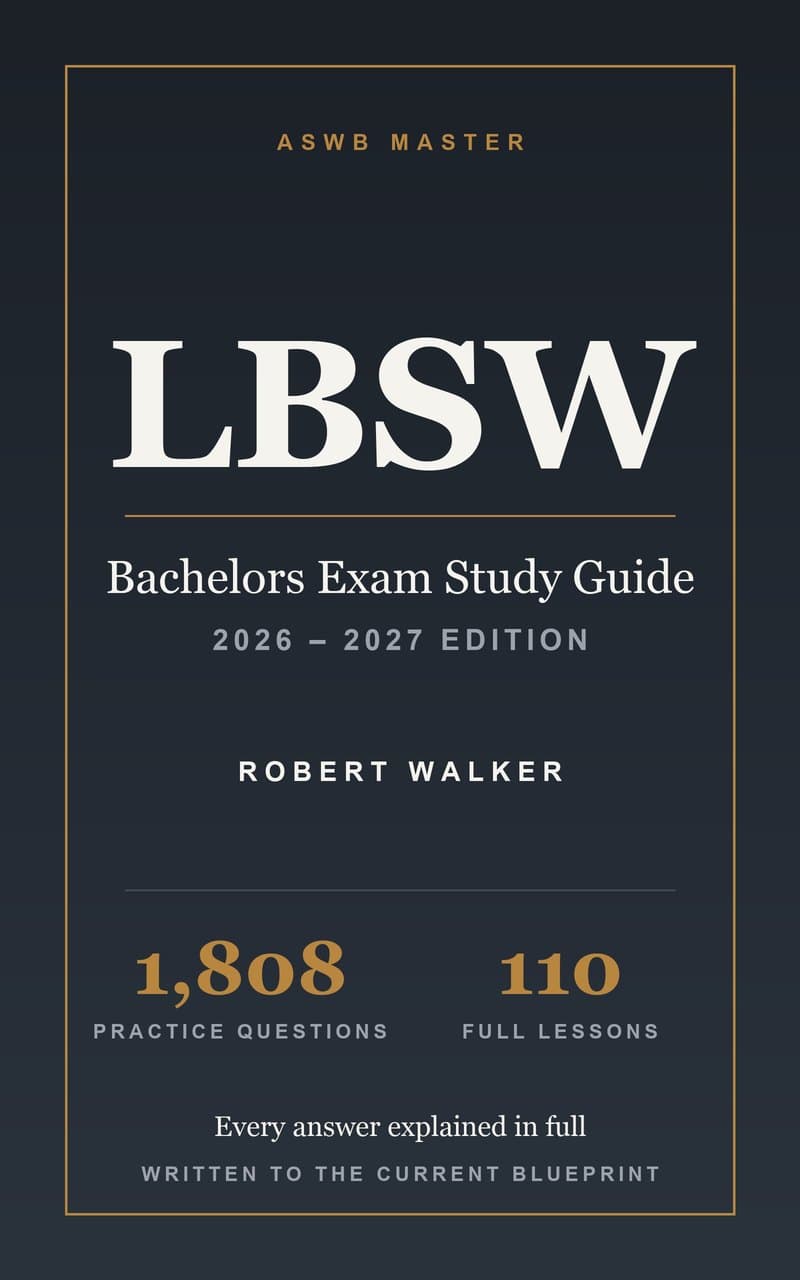
LBSW
ASWB Bachelors Exam Study Guide
The whole Bachelors blueprint, lesson by lesson, with a practice set after every one.
- Lessons
- 110
- Questions
- 1,808
- Pages
- 1,723
- Formats
- PDF + EPUB
Final sale — a download cannot be returned, so read the free sample below first. Refund policy
Read a whole lesson first
The free sample is a real extract from the LBSW guide — one complete lesson and the 22 practice questions that follow it, each with its full explanation. Nothing is abridged.
We’ll email you occasionally about the exam and this platform. Unsubscribe in one click, any time.
What is in it
110 lessons, one for each applied knowledge statement in the content outline effective 3 August 2026. Nothing here is padding and nothing on the outline is missing — the structure below is the outline’s own.
Each lesson is followed by its own questions, with the answers after the set rather than beside each question, so you can test yourself before you read the explanation. That averages 16 questions a lesson, and all 1,808 explain why the right answer is right and why each other option is not.
Who sits the LBSW exam
For generalist practice at bachelor’s level, normally after a BSW. It shares its content outline and question bank with the Associate exam.
It commonly leads to LBSW, LSW, LSWA — though the title varies by jurisdiction, and your board decides which exam you are approved for. Of the 51 jurisdictions whose requirements we have checked against their own board, 17 require this exam for at least one license level. More on the Bachelors exam, or check your state.
Every chapter, weighted as the LBSW exam weights it
The three content areas do not carry equal weight, and the weighting differs by exam category. These are the weightings for the LBSW examination.
IValues and Ethics
35% of the exam- IAEthical Principles and Responsibilities8 lessons
- IBEthical Service Delivery10 lessons
- ICDiversity and Social Justice9 lessons
IIAssessment and Planning
33% of the exam- IIAAssessment Concepts23 lessons
- IIBAssessment Methods and Techniques10 lessons
- IICAssessment Practices6 lessons
IIIIntervention and Practice
32% of the exam- IIIAPractice Concepts9 lessons
- IIIBIntervention Methods and Techniques28 lessons
- IIICPractice Evaluation and Research3 lessons
- IIIDSupervision and Administration4 lessons
Both formats, one price
EPUB
1.2 MB
Reflows to any screen, so the type stays readable on a Kindle, Kobo, tablet or phone. Your reader keeps your place and your highlights.
6.9 MB · 1,723 pages
Fixed 7×10in pages with a navigation outline and live links from the contents to every chapter and lesson. Prints cleanly if you want a section on paper.
Both carry identical content. The paperback edition on Amazon carries fewer questions — Amazon caps that trim at 780 pages, so the print run drops several per lesson to fit.
How the questions are built
The exam asks which answer is best, not which is correct — most of its questions offer more than one defensible option and turn on a single qualifying word. FIRST, NEXT, BEST and MOST each ask something different, and the guide labels which one is in play.
Every rationale says why each wrong option is wrong, not only why the right one is right. If you answer correctly for the wrong reason, that is the only place you will find out.
The answer key is balanced across every option position, so a score cannot be improved by pattern-spotting rather than by knowing the material.
The book, or the platform?
The book is the whole syllabus in one file, to read in order and keep. The platform adds what a file cannot do: practice that adapts to what you get wrong, full-length mocks under real timing, and progress you can see. Lifetime access includes this guide and the other three.
Questions people ask
- What is inside the ASWB LBSW study guide?
- 110 lessons — one for every applied knowledge statement in the content outline effective 3 August 2026 — and 1,808 practice questions. Each lesson is followed by its own question set, with the answers and full rationales after the set rather than beside each question. The PDF runs to 1,723 pages.
- Which formats do I get, and do they differ?
- Both, for one price: a PDF with a linked contents and a navigation outline for a laptop, and an EPUB for a Kindle, Kobo, tablet or phone. They carry identical content — neither is an abridgement of the other.
- Is this the same as the printed paperback?
- The content is the same book, but the paperback carries fewer practice questions. Amazon caps a paperback of this trim at 780 pages, so the print edition drops several questions per lesson to fit. The download has no such limit and carries the complete set.
- Do I need a subscription to read it?
- No. It is a one-time purchase, yours to keep, and nothing renews. It sits in your library and you can download it as often as you like. Lifetime access to the platform includes all four guides at no extra cost, if you would rather have both.
- Can I get a refund?
- No — the study guides are a final sale. The whole book is delivered the moment you pay, and there is no version of returning a file you already have. That is why the sample is a complete lesson and all 22 of its questions rather than a page of marketing: read it before you buy. Duplicate charges and downloads broken at our end are always put right.
- Is this affiliated with ASWB?
- No. ASWB Master is independent. It is not affiliated with, endorsed by, sponsored by or approved by the Association of Social Work Boards. The guide is written against the content outline they publish, which is free to read on their website.
Written to the current content outline
Every question explained in full
Answer key balanced across every option position
Instant download, in your library forever
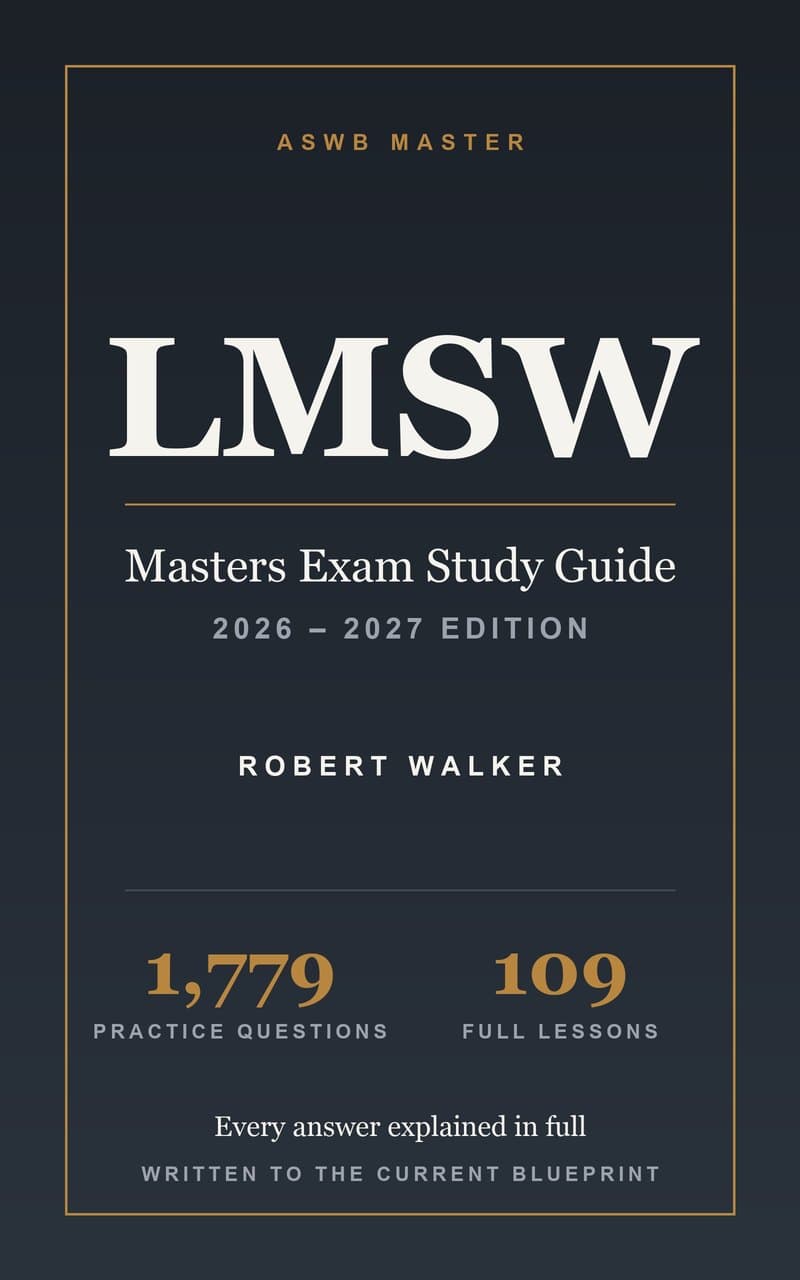
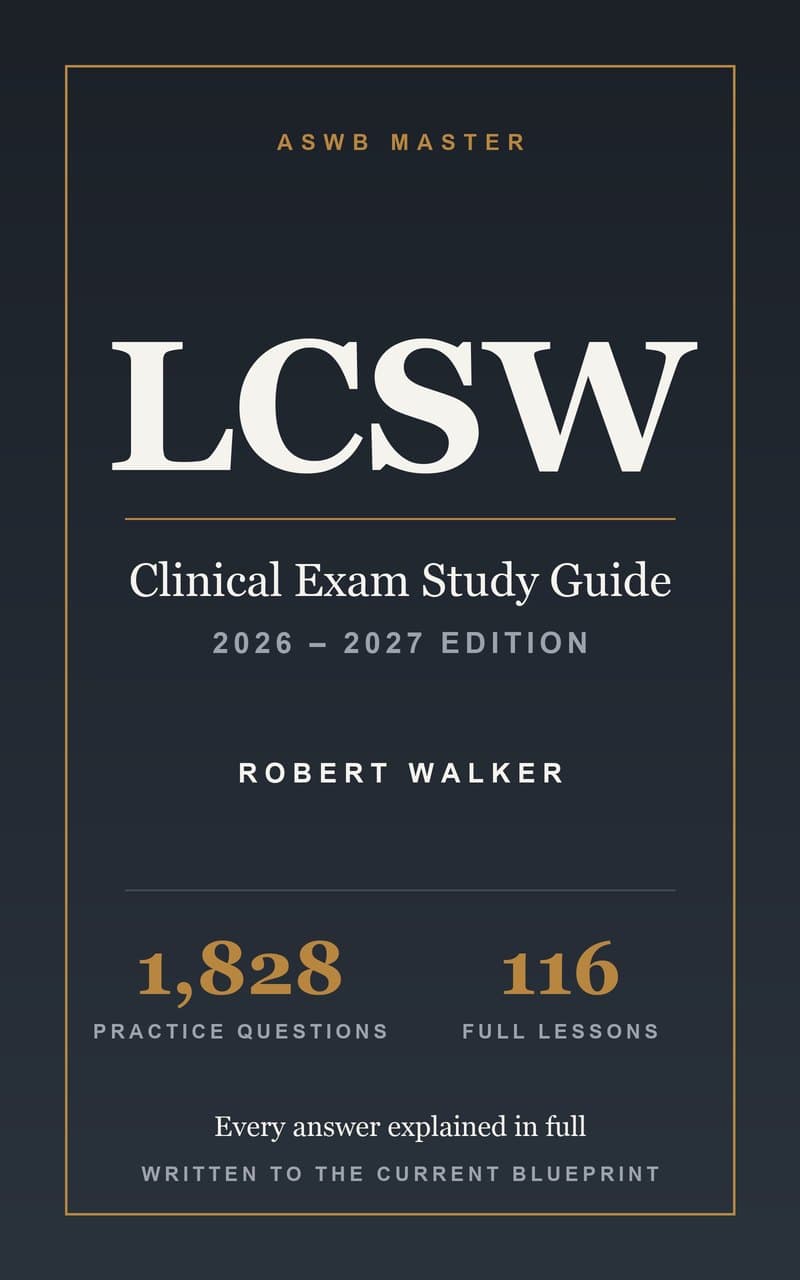
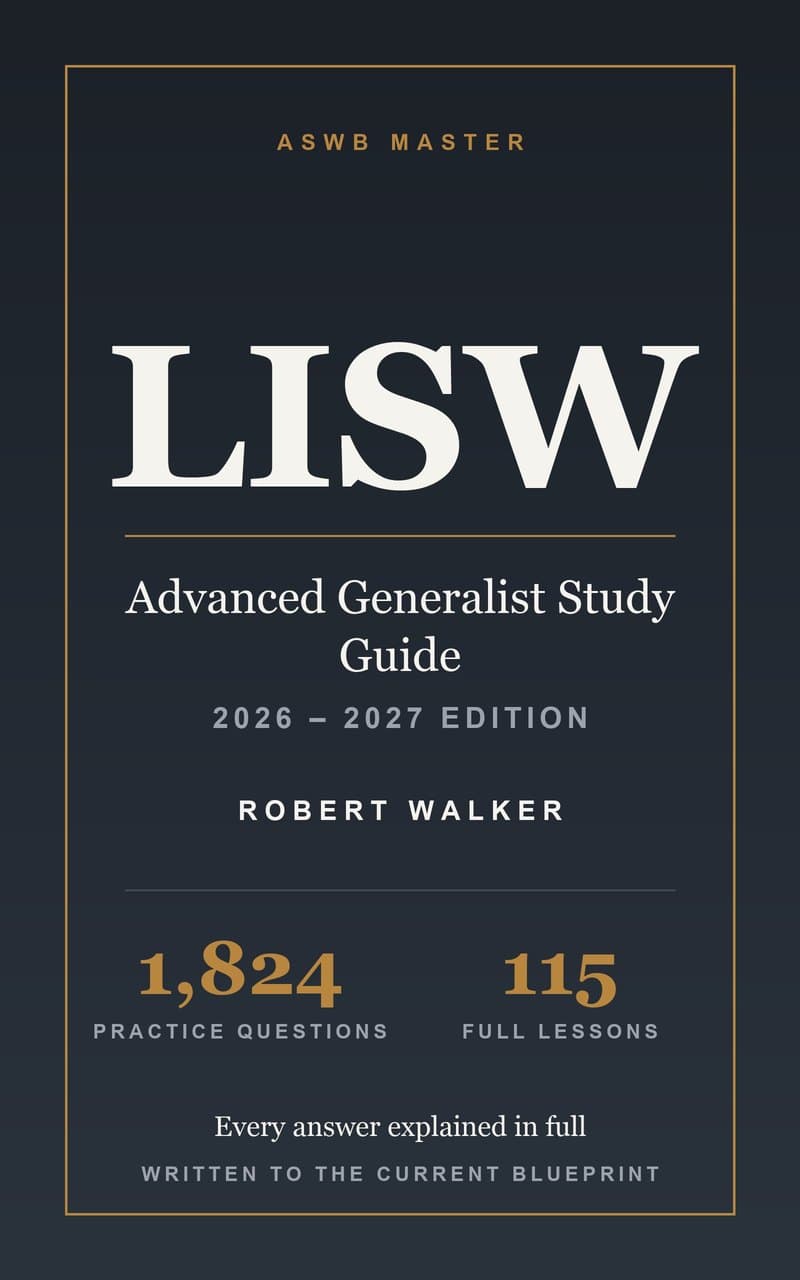
The other exam categories
One guide per category. Buy the one for the exam you are sitting.
ASWB is a trademark of the Association of Social Work Boards. ASWB Master is independent. It is not affiliated with, endorsed by, sponsored by or approved by ASWB. All content is original and was written against publicly published content outlines.